At the start of our research into conspiracy theories our group had a bit of trouble focusing in on a topic to focus on. We knew that we wanted to focus on conspiracy theories but we had to narrow the topic down. After much debate we decided to focus on people who deny tragedies. As we began researching for our topic different members of the group would pause and ask, “Why do people even believe in this stuff?” or “This is awful. I hate these people.”. After repeating statements like this a few times we realized that we had to research why people deny tragedies.

After we decided this type of reading we had the group split up to find the best article explaining motives behind tragedy deniers. I forget who came up with the article, but as a group we decided that the New York Times article “Why Rational People Buy into Conspiracy Theories” was the best choice. Most of the other articles talked about the same topics. However, this article’s language was not only had accessible language, direct correlation to our topic but, it was short too. We decided that this article was the best to show to the class because other articles carried the same information but was a denser read.
The article was written after the Boston Marathon bombing. The author had seen an influx of tragedy deniers and conspiracies surrounding the bombing hours after the tragedy. At first the author was shocked but with further research realized that conspiracy theories are normal. Psychologists claim that conspiracy theories are often not a reaction to the event itself but a confirmation of a theorist’s world view. So someone who is against immigrants would more than likely believe a conspiracy theory that an immigrant orchestrated the Boston Marathon bombing in order to take down America. In other words, a person is more susceptible to believe a conspiracy theory if it affirms their worldview. This is why perfectly normal people will believe in conspiracy theories that most people consider to be irrational. In fact, 63% of Americans believe in a politically inspired conspiracy theory.
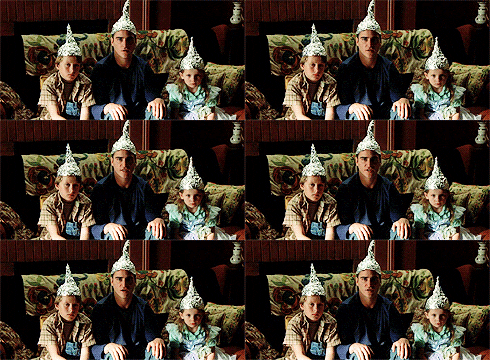
Another proposed reason why people believe in conspiracy theories is to make sense of a devastating event. Many people imagine that devastating events such as the Holocaust or Sandy Hook shooting didn’t occur because they don’t want to live in a world where tragic events happen. It’s easier to pretend that it’s a hoax than face the music–terrible things do occur in the world.
This thought process leads to people having a superiority complex–the author asserts, “ It can be comforting to do your own research even if that research is flawed. It feels good to be the wise old goat in a flock of sheep.” (Koerth Baker). Confirmation bias or the tendency to look for sources that supports your world view helps a conspiracy theorist to support their argument. It allows people to feel as though they are in control of the world rather than the lack of power that people feel when a tragedy occurs.

This reading is important because it shows how normal people can believe awful conspiracy theories. I think that reading this article will allow classmates to stop discussion of why there’s conspiracy theorists and focus on how to stop conspiracies. I think that this article is a perfect way to shape the rest of class discussion into something less emotional and more academic and solution oriented.
Check out Group Three’s Article Here!
 Tin Foil Hats Anonymous